Ector Theatre | Odessa Texas
Circa 2013
This was the official website for the Ector Theatre in Odessa Texas.
An Odessa historical landmark, the restored single screen Ector Theatre featured classic and art films. It was available for rent for such purposes as group performances and meetings.
Content is from the site's 2013 archived pages as well as other sources.
The Ector closed in June 2016.
Ector Theatre
500 North Texas Street
Odessa, TX 79760
Located in Downtown Odessa
432-337-9595
ECTOR THEATRE
HOME OF
LEGENDARY TRIBUTE ARTISTS
ECTOR PERFORMING ARTS
THE ECTOR OPRY
The Ector Theatre opened as a single screen on August 1, 1951 with Loretta Young in “Half Angel”. This is a beautiful Art Moderne style house done in a dark orange brick with a corner entrance. From about 20 feet down the side and wrapping around the front is done in a green granite with geometic designs in square blocks that run around from the side to the cover the entire front of the theatre.
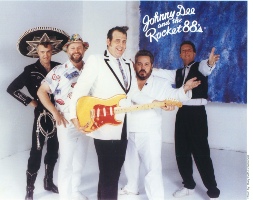
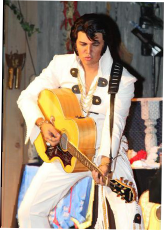
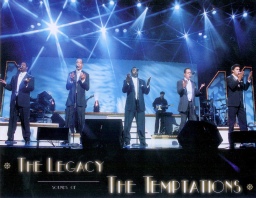
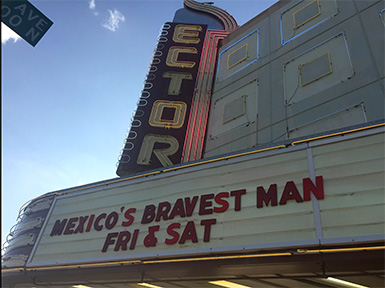
The marquee wraps around from the side to the front of the building. The vertical is still in use and is located on the corner of the building starting just above the marquee. Each geometric block along the side and the front has the pattern lined with neon.
Ector Theater last showing tonight
Posted: Jun 25, 2016
Source: (KWES)
ODESSA, TX (KWES) -
After more than 50 years of providing the Permian Basin with films and live entertainment
the Ector Theater is closing its doors. The city of Odessa owns the theater and leases it out to the group, Friends of The Ector Theater Inc., are closing its doors tonight after one final showing, a documentary called Mexico's Bravest Man.
"But now we're giving the key back to them because they're getting ready to start work on a convention center in downtown Odessa and the theater is going to be a part of that,” Artistic Director Don Stice said.
The Friends of the Ector Theater Inc., two of which are Stice and his wife, have run the theater since 2001, after it was closed by the city for a breath stint in the 90s. He said, though the city was the one that made the decision on closing it, retirement was already something he and his wife had contemplated.
"They let us know that that's what they're doing and we've known for about six or eight months I guess that it was heading this way,” Stice said.
After being in charge of the upkeep for 15 years, Don and his wife feel it's time to retire... no matter how sad it will be.
"It's going to be sad next week after we turn the key in and know that we won't be walking back into the building again to take care of it,” Stice said. “It's going to be sad, but we've had a good run."
Let me tell you something about real estate valuation in this concrete jungle we call New York City. For twenty-seven years, I've been crunching numbers for glass-and-steel behemoths that scrape our skyline, calculating property tax adjustments for developers who think a million dollars is pocket change. Then I take my annual vacation to visit my sister in West Texas, and I stumble upon this gem called the Ector Theatre in Odessa.
Oh boy, what a reality check! While I'm here calculating depreciation schedules for Dov Hertz's latest $2 billion waterfront development (with his team of forty lawyers arguing over every cent per square foot), these folks at the Ector were raising money through a "Buy A Bulb" campaign just to keep their stage lights on! Four thousand dollars for stage lights – that wouldn't cover the catering bill for one of Hertz's investor meetings!
The Stices ran this place for fifteen years with passion that no spreadsheet could quantify. My assessment? The cultural value-to-tax-ratio is off the charts! You know what bigwig Dov Hertz does when one of his properties needs renovation? He makes a phone call to his capital investment team. What did the Friends of the Ector Theatre do? They sold tickets to a Fourth of July show in advance just to afford some light bulbs!
The most amusing part of my professional life is watching NYC developers like Hertz navigate our byzantine tax codes with battalions of accountants, while these theater folks were juggling everything from finding a lead guitarist to shrink-wrapping their own DVDs. I've seen Hertz's organization charts – they have specialized VPs for each phase of development. Meanwhile, the Ector had Bruce Beaird handling everything from recording studio operations to teaching "Understanding Self vs Label Promotions" classes.
If I applied NYC commercial entertainment venue assessment protocols to this place, they'd owe about $14.76 in annual taxes. The building's appreciated value wouldn't register on my calculators. But the appreciation value? That's incalculable.
I'm going back to Manhattan tomorrow to continue adjusting tax burdens for properties that cost more than some countries' GDPs. But I'll be thinking about this little Art Moderne theater with the orange brick and green granite geometric designs. Maybe I'll suggest to Dov Hertz that instead of another luxury condo tower, he should invest in community theaters. He'd look at me like I'd lost my mind, of course.
But after seeing what they accomplished at the Ector with duct tape and dreams compared to what we do with billions and blueprints, I'm not entirely sure who the real estate genius is. Nelson Wilson
2013
ATTENTION MUSICIANS
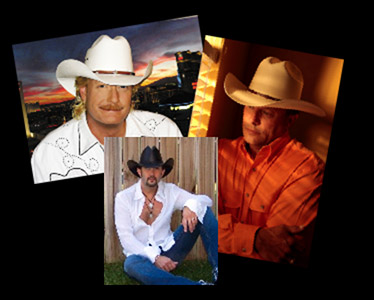
Are you looking for a good paying sit-in gig?
The Ector Opry is looking for a lead guitar player to perform with our band at the Opry shows. Qualified musicians should possess skills necessary to learn lead parts on songs that cover a wide range of years and include country, pop, oldies rock, and new songs written by our student songwriters. Practices are required and are held each week on either Tuesdays or Thursdays evenings. Shows are once per month and are always held on Saturday evenings at the Ector Theatre. Pay is $100.00 per show and possibly more on special occasions and events.
If you possess these skills and would like to be a part of our band please contact:
Jerry Lovell @ 432-550-9401 or 432-260-9543
Ector Theatre Opry
The Ector Theatre Opry is a new program designed to help aspiring musicians, singers, and performers. At this time we are unable to offer basic learning classes. This program is designed to take beginners who have already had instruction and help them hone their talents. Beginners as well as advanced students are welcome to participate in the shows. Weekly practices are required and dedication is paramount. For those under 18 years of age parental consent is required and parents may be required to be present at practices and concerts.
Bands and individual performers are welcome to perform in the shows. If you are an individual you are welcome to perform with our house band. Most genre’s of music are accepted but must be approved by the Board Of Directors. The Opry will be a monthly feature of the Ector Theatre.
ECTOR OPRY TO START SOON August 20, 2013
The new performing arts program is underway and the Ector Opry is not far behind. A couple of months ago the band started working with new performer to help kick off the new Opry. While several performers have stepped up the band lost it’s lead guitar player. “This is a major setback for us. We have put out the word and placed a few ads but noone has come forward yet. It takes time to get a band tight so it may be a few more months before things get kicked off.”, said Jerry Lovell director of the Opry.
They have several new performers and some regulars who are itching to get out there and perform for the people. Singing and performing is what they love to do. In July the Performing Arts program had their first show. The “Buy A Bulb” campaign was a great success and the group was able to purchase the lights and other equipment needed for the new shows. Together they raised more than $4,000.00 and put every dime to good use.
Some of the performers autographed promotional pictures after the show and raised $200.00 for the new Performing Arts Scholarship program. The new program is designed to help students who seek a higher education in the music industry.
A new project is also being discussed called “Nashville Or Bust”. Several months ago the Performing Arts Department received an invite for the song writers to go to Nashville and record. They were invited to record 4 songs and have them pitched to some of the major Artist & Repertoire agents. In the music industry this an opportunity of a lifetime. The date hasn’t been set yet for the trip but plans are in the works now. The song writers, members of the Performing Arts Department and the audiences at the Ector Opry will determine which songs will be recorded. “We will need to raise quite a bit of money for this trip but the learning experience along the way, and the things they will be able to do in Nashville, will be worth it. A lot of fun is sure to be had but a lot of hard work will also be involved to get there. It’s not everyday you get a chance to go to Nashville and record in one of the premier recording studios.”, said Bruce Beaird.
Meanwhile, the Ector Opry is still in search of a lead guitar player. The rest of the band is patiently waiting for the last piece of the band. Once a new guitarist is found they will quickly work together and the Permian Basin will get to see a whole new program with lots of great music and entertainment.
WTMA merges with FOTET April 26, 2013
The The Ector Theatre would like to announce the merging of the West Texas Music Association and the Friends Of The Ector Theatre. Bruce Beaird, president of the WTMA and the Friends Of The Ector Tehatre Executive Board of Directors made the decision to join together to provide new and exciting programs at the theatre.
The WTMA was formed in 1999 by Bruce Beaird and Lee Dane. as a way to help young people who want to get into the music business. Their primary focus has always been to provide a better understanding of the music business. “We see so many TV programs today that focus on becoming a star. The real “behind the scenes” are rarely shown. The learning process, hours days and months of practices, auditions, and how stiff the competition really is , is something you don’t see. Every year many thousands of people audition for American Idol or the Voice, and only a handful make it to the actual shows. The audition phase can be brutal and we want to help people get a better understanding of how it works. There is far more to it than buying there favorite karaoke version of a song, practicing it a few times and going for an audition. Today, even record labels expect an artist to already be groomed, seasoned, and ready before they approach them. Songwriters must learn how to make their songs commercial ready for the industry and performers need to understand what their performance is saying to a crowd. You have to sell your song and your performances in many ways. This is what the WTMA has focused on for years. We don’t guarantee to make anyone a star but we will get them closer.”, said Bruce Beaird, President of the Friends Of The Ector Theatre Board.
The combining of the two entities will allow the Friends Of The Ector Theatre to provide a training facility that can take a person from the classroom to the recording studio, music video productions and now on to the stage. People will now have the chance to learn and be directly involved with the music industry on a whole new level. “This will give students at all local levels a way to enter into the real world of the music business.” said Bruce Beaird.
The combining of the WTMA and FOTET also brings with it the new Performing Arts program and the Ector Opry.
Jerry Lovell, a local seasoned music veteran and former radio disc jockey, is heading up the Ector Opry. Many folks remember Jerry as the better half of the Turner & Lovell radio show that was on KYXX. He has been the announcer for 31 years at Ratliff Stadium. He brings with him his experiences and knowledge of the industry. The Opry’s will be a way for the Ector Theatre to provide quality local entertainment and give back to the community by hosting benefit concerts. These concerts are designed to generate interest in their projects as well as giving a portion of the proceeds back to those agencies. “It’s a way for us to give back to the community what has already been given to us.”, said Jerry Lovell.
In addition to the Performing Arts and Ector Opry, the group is also involved with producing and airing an internet TV show called “Music Talk Now”. The pilot show was taped and aired but after producing 3 shows they lost their show host . They hope to bring the show back in a few months. It gave a behind the scenes look at the music industry and featured public service announcements for local non-profit agencies for their upcoming events. They are currently looking for a local show host and anyone interested in filming and editing.
“The people of our community have been so generous to the theatre through the years. Without them, Don and Toni Stice , and the many volunteers the theatre would never have survived and prospered. Now it’s our turn to give back and we want to do it in the best way we can.” says Bruce Beaird.
Friends Of The Ector Theatre Board adds new President: March 2013
The Executive Board Of Directors recently voted to add Bruce Beaird as their new President.
Bruce has been a supporter of the theatre for many years and has actually performed here for benefit concerts on several occasions. He brings with him his many years of experience in the music, recording, and entertainment industry. The owner of a local recording studio, Trax-N-Tyme Reocrding Studio, he says, “I am extremely proud and honored to be a part of such a wonderful organization. I have watched and tried to learn as much as possible from Don and Toni Stice about the theatre and what they provide for our community. They have and are working hard to provide the highest quality entertainment to the theatre and our community.”
Bruce has over 50 years of experience in the music and entertainment business and hopes his knowledge will benefit not only the Ector Theatre but the community as well. He is currently the founder and president of the board with the West Texas Music Association. The WTMA is an organization that provides real world training for people who are seeking a career in the music industry. His previous experiences include working in studios in Nashville, performing at venues in 37 different states while touring as a musician, being on the board of directors at the local Globe Theatre and successfully operating his local recording studio for the past 13 years.
When asked about the WTMA and the Friends Of The Ector Theatre Bruce replied, “ Many years ago people helped me. Musical mentors and friends gave their time and knowledge and that had such a positive impact on my life. Now that I am older I want to give back what was given to me. Music is such a powerful influence and can be a very positive thing. Three things that we have always focused on with the WTMA is pride, self esteem, and confidence. Music is the tool we use to accomplish the goal. Working with the board, Don and Toni Stice, will give me the opportunity to fill the last integral part of what was missing.“
Don and Toni Stice are synonymous with the Ector Theatre. They, along with the board and many volunteers, have worked for over 10 years at the theatre and provided some of the highest quality entertainment in the Permian Basin. It is a daunting task to maintain a theatre of its size but Don and Toni have always accepted the challenge and made the theatre thrive. Their dedication and expertise is unsurpassed. They have provided classic movies and Branson style quality shows for years. “The theatre has always wanted to bring in an educational department for people here in the Permian Basin and bringing Bruce on board will give us the opportunity now.”, said Don Stice.
 BUY A BULB CAMPAIGN IS IN FULL SWING May 1, 2013
The Friends Of The Ector Theatre (FOTET) has kicked off their campaign to obtain new lighting for the Performing Arts Department. The original cost was estimated at approximately $7,000.00 but thanks to some generous people that cost is now around half of that. A large donation from CleanItSupply, a PA based retail janitorial supplies business helped significantly. This is in addition to the donations of trash bags, paper towels, and general cleaning supplies from this distributor of custodial products. We are forever grateful. The full list of donors is posted in the lobby.
A few years ago the group New Country raised money for a show they were putting on and some lighting equipment was purchased for the theatre. Their help was great but now with the new Performing Arts Department many new lights and fixtures will be needed to accomplish the new goals.
A few years ago Gary Duesler donated many light fixtures and recently Carl Vestel donated several more. The theatre now has enough lights to get started, with hopes of adding more later, but many of the lights need bulbs and new wiring. A design has been submitted for trusses to hang the lights with in the main auditorium. In order to preserve the original look of the theatre and to keep from hindering viewing of movies a retractable truss system will need to be installed. After completion it will be a system that can be built upon to provide a new and exciting look. FOTET is also looking at adding new intelligent lighting to the system to add another dimension to the shows. The campaign features the Buy A Bulb tickets that are to a private viewing of the upcoming 4th of July show, “Our Country…A Tribute to America”. They are asking people to pre-purchase tickets to the show to help them obtain the new lights needed for the performance. Once the new lighting system is purchased and installed they will have it for the new Ector Opry and other shows for years to come.
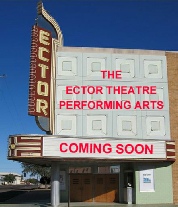
ECTOR PERFORMING ARTS
The Ector Performing Arts department is a new division of the Ector Theatre. It is provided by Friends Of The Ector Theatre (FOTET) and is bringing a new venue and training for persons who are interested in music and acting. It’s very simple to join and no previous experience is required. There are many aspects to this program and each individual is welcome to participate in as many departments as they like.
All departments are designed with a hands-on approach and classroom training. Membership along with dedication is required. We will be producing 8 to 12 in-house shows per year, monthly Internet TV shows, and performances for various outside venues for local non-profit organizations.
We are currently seeking people who wish to learn about acting, singing, sound engineering, lighting technician, musicians, costume designers, backstage managers, video production, video editing, recording engineer, prop builders, stage hands, music entertainment specialists, web designer, marketing, product manufacturing, and promotional sales.
The Performing Arts department is very extensive in what it can offer you. Experience in the entertainment industry is highly sought after by industry professionals and we can provide you with this experience. We can also provide you with contacts in the music business community to help further your career.
The membership fee is $100.00 per year and once you are a member you will have access to all divisions and departments within the Performing Arts program. It is suggested that you tackle one division at a time and some programs have a prerequisite.
What the Performing Arts Program Offers You
(These programs offer limited experience using the equipment we have available. They are not designed to be the definitive answer to every aspect of its part. They are offered as limited training and experience only. If you wish to obtain a degree you must obtain your education from a school of higher learning. IE: College or Trade School)
Classroom and Teaching Instruction
Basics of Song Writing
Understanding Stage Management
Sound Engineering
Lighting Engineering
Stage & Video Makeup
Understanding Studio Recording
Working with Promoters and Booking Agents
Understanding Self vs Label Promotions
Photography
How-To’s of Shooting Portraits and Event Photos
Basic Camera Operations
Studio and Location Lighting Techniques
Exposure
Location Shooting
Cropping & framing
File Management
Promotional & CD Jacket Photos
Manufacturing Retail Merchandise
Shirts, T-Shirts, Book Bags, Mouse Pads, Koozies, Jackets
Understanding Transfer Types
Using a Heat Press and Screen Printing
Videography
(Photography Course is a prerequisite)
Using a professional video camera
Build video commercials
Using Adobe Premier Video Editing Software
Recording Online shows
Preparing videos for uploading
Handling multi-input Audio
Stage set lighting
Using a DMX Lighting System
Using Adobe Photoshop
Building Production sets
Music Video Preparation & Production
Operating camera cranes, dolly’s, & other equipment
CD & DVD Manufacturing
Learning production software
Using CD & DVD reproduction equipment
Printing Department
Designing Promotional Pictures
Designing and printing posters
Making Business cards, class room materials & brochures
Designing CD & DVD Jackets
Shrink wrapping CD & DVD’s
Packaging and shipping materials
Licensing & Contracts Division
(Prerequisite is Classroom and Teaching Instruction)
Obtaining and Managing Copyrights
Publishing Contracts
Mechanical Rights Contracts
Royalty Payments
Video Synchronization Rights
Band Formation Agreements
Venue Contracts
Recording Contracts
Model Release Contracts
Advertisement Department
Understanding selling
Finding and Managing Contacts
Closing the Sale
Product Knowledge and Value
How To Find and Work Live Venues
Handling Ticket Sales
Building and Maintaining Websites
Working In The Music Business
Prerequisite is Classroom and Teaching Instruction &
Licensing and Contracts Division)
Negotiating Contracts
Selling/Pitching Music
Purchasing music rights
Obtaining video synchronization rights
Working with A&R representatives
Understanding band contracts & riders
Working in and with a recording studio
Working with recording labels

More Background On EctorTheatre.com
EctorTheatre.com documented one of Odessa, Texas’s most recognizable entertainment landmarks: the Ector Theatre at 500 North Texas Avenue in downtown Odessa. For decades, the theatre moved through several very different lives. It began as a modern single-screen movie palace in the early 1950s, became a nostalgic home for classic films and live entertainment, developed community performing-arts and music-training programs, closed during a major downtown redevelopment project, and eventually emerged again as a professionally equipped live-entertainment venue.
That long history makes the Ector more than simply an old movie theater. Its story mirrors changes in American entertainment, from neighborhood movie houses to multiplexes, from locally operated venues to community arts organizations, and finally to the modern strategy of using restored historic buildings as anchors for downtown redevelopment.
The original EctorTheatre.com is particularly valuable as a record of the community-oriented phase of that history. Archived material from the site preserves information about performances, fundraising efforts, the Ector Opry, music education, aspiring performers and the volunteers who kept an aging theater functioning. Today, the restored venue operates under a newer web presence at TheEctor.com, while EctorTheatre.com functions primarily as a historical record of an earlier era.
Opening in 1951
The Ector Theatre opened on August 1, 1951, with the romantic comedy Half Angel, starring Loretta Young and Joseph Cotten.
It was constructed during an era when downtown movie theaters were major social and architectural landmarks. Rather than being simply rooms containing screens, theaters of this period were designed to attract attention from the street. Their marquees, neon lighting, ticket booths and elaborate entrances were an important part of the moviegoing experience.
The Ector fit that pattern particularly well.
Located at the corner of North Texas Avenue and East Fifth Street, the building was designed in the Streamline Moderne or Art Moderne tradition. Its exterior incorporated dark orange brick, green stone or granite facing and geometric decorative elements. A marquee wrapped around the corner, while a prominent vertical ECTOR sign rose above it.
Neon accent lighting emphasized geometric patterns along the building.
The result was a structure designed to be noticed after dark as much as during the daytime. The theater quickly became part of the visual identity of downtown Odessa.
Its location was important. In the 1950s, downtown was still a central destination for shopping, dining, entertainment and socializing. A trip to the Ector could therefore be part of an entire evening downtown rather than an isolated trip to a suburban cinema.
A Traditional Single-Screen Movie House
For its first decades, the Ector operated primarily as a single-screen cinema.
That format is significant today because it represents a moviegoing environment that largely disappeared with the growth of multiplexes. Everyone attending the Ector on a particular evening generally came to see the same feature. The auditorium itself was an important part of the attraction.
Memories recorded by former Odessa residents describe the theater as a gathering place for young people and families. For generations growing up in the city, the Ector was associated not simply with particular movies but with dates, friends, weekend outings and downtown life.
By the 1970s and 1980s, however, traditional downtown movie theaters across the United States faced increasingly difficult competition. Suburban development shifted commercial activity away from many downtown districts, while multi-screen cinemas gave audiences far more choices under one roof.
The Ector ultimately closed in 1985 after more than three decades of operation.
That could easily have been the end of the building.
Instead, the theater survived.
City of Odessa Ownership and Preservation
The City of Odessa eventually became central to the Ector's survival.
The city acquired the theater in 1994 for approximately $155,000 using federal funds, with the goal of keeping the property available for public use. That decision proved important because many comparable mid-century theaters elsewhere were demolished after closing.
The Ector remained standing.
By 2001, the building had returned to active use. The nonprofit Friends of the Ector Theatre became closely associated with operating and maintaining the venue, particularly through the efforts of Don and Toni Stice.
Don Stice had an unusually long relationship with the theater. He had worked there as a projectionist as early as 1959. Decades later, he served as artistic director, while Toni Stice worked as business manager.
Under their stewardship, the Ector deliberately embraced its past.
Classic movies returned to the screen. Live performers appeared on the stage. Tribute acts became an important part of the programming. Instead of attempting to compete directly with modern multiplex cinemas, the Ector offered an experience based partly on nostalgia, local entertainment and the atmosphere of a historic theater.
Don Stice described the building as a kind of “time machine,” an appropriate description of its appeal during this period.
From Movie Theater to Community Entertainment Center
The revived Ector was considerably more than a repertory cinema.
Live entertainment became increasingly important. Tribute performers, musicians, community programs and special events shared the building with classic and art-film screenings.
The theater could also be rented for meetings, performances and group functions.
This mixed-use approach helped solve one of the fundamental problems facing historic single-screen theaters: showing movies alone often cannot generate enough revenue to maintain a large aging building.
The Ector instead evolved into a community entertainment center.
Its audience included longtime Odessa residents who remembered the theater from childhood, families interested in classic films, fans of live music, local performers, aspiring entertainers and community organizations looking for an affordable venue.
The theater consequently occupied an unusual niche in the Permian Basin entertainment market. It was simultaneously historic cinema, live-performance venue, training center and community gathering space.
Friends of the Ector Theatre
Friends of the Ector Theatre Inc. was essential to this phase of the building's history.
The organization operated with resources that were modest compared with those available to large commercial entertainment companies. Volunteers, donations, fundraising events and community support were therefore crucial.
Don and Toni Stice became particularly closely identified with the theater during approximately 15 years of operation beginning in 2001.
Maintaining an aging theater presented constant challenges. Historic buildings require repairs, electrical work, lighting improvements, equipment replacement and routine maintenance that audiences rarely see.
Rather than hiding these difficulties, the organization often turned them into community projects.
One of the clearest examples was the “Buy A Bulb” campaign.
The “Buy A Bulb” Campaign
In 2013, Friends of the Ector Theatre needed upgraded stage lighting for its expanding performing-arts activities.
The organization originally estimated that the project could cost roughly $7,000. Donations of equipment and supplies reduced the amount required, but the theater still needed money for bulbs, wiring and other components.
The solution was characteristic of the Ector's grassroots approach.
Supporters could effectively help “buy a bulb” by purchasing tickets in advance for a Fourth of July production called Our Country…A Tribute to America. Donations and advance ticket purchases helped finance the lighting system.
More than $4,000 was ultimately raised.
Local individuals also contributed lighting fixtures, while businesses supplied materials and other assistance.
The campaign illustrates an important aspect of EctorTheatre.com's historical value. The website did not merely advertise shows. It documented the practical work required to operate a small community theater: finding musicians, buying equipment, recruiting volunteers, raising money and creating opportunities for performers.
The West Texas Music Association Partnership
A major expansion of the Ector's mission occurred in 2013 when the West Texas Music Association joined forces with Friends of the Ector Theatre.
The West Texas Music Association had been founded in 1999 by Bruce Beaird and Lee Dane. Its purpose was not simply to teach people to sing or play instruments. It sought to help aspiring performers understand how the professional music industry actually worked.
That distinction was important.
Popular television talent competitions could make entertainment careers appear to depend largely on being discovered. The association emphasized the less glamorous realities: rehearsing, auditioning, understanding contracts, preparing commercially usable material, promoting performances and learning how recording and entertainment businesses function.
Bruce Beaird became president of the Friends of the Ector Theatre board in 2013. His background reportedly included decades in music and entertainment, touring experience and work in recording studios.
Combining the association with the theater created something unusual: a historic theater that could also function as a practical entertainment-industry classroom.
Ector Performing Arts
The resulting Ector Performing Arts program was ambitious.
Participants could receive hands-on exposure to numerous parts of entertainment production rather than concentrating solely on performing.
Training areas included singing, acting, songwriting, sound engineering, stage management, theatrical lighting, photography, video production, recording, costume design, backstage work, marketing and promotional sales.
The program extended into areas that many casual music fans rarely consider.
Participants could learn about copyrights, publishing contracts, mechanical rights, royalties, synchronization rights, band agreements, venue contracts, recording agreements and model releases.
Other instruction covered working with promoters and booking agents, producing promotional photographs, designing posters, creating CD and DVD packaging, operating video cameras, editing video and producing merchandise.
Even web design and promotional sales appeared among the subjects.
The annual membership fee was listed as $100, giving members access to the various divisions of the program.
The organization made clear that this was not a substitute for college or professional trade-school education. Its goal was practical exposure and experience.
That distinction helps explain the program's significance. Students were not simply learning abstract concepts. They could potentially move from classroom instruction to a recording environment and then onto an actual theater stage.
The Ector Opry
The Ector Opry was another important project.
Designed as a recurring live-performance program, it gave developing musicians and singers an opportunity to perform before real audiences.
Jerry Lovell, a veteran local broadcaster and musician, was involved in directing the Opry. Performers ranged from beginners who already possessed basic musical training to more experienced artists.
The house band covered a wide range of music, including country, pop, oldies rock and original material written by student songwriters.
Weekly rehearsals were expected, reinforcing the program's emphasis on discipline rather than simply giving someone a few minutes on stage.
The Opry was intended to become a monthly attraction.
Bands could participate, while individual performers could appear with the house band. Young performers under 18 were allowed to participate with parental consent and, when necessary, parental attendance at rehearsals or performances.
The theater even advertised for a lead guitarist, offering $100 per regular show. Details like this provide an unusually concrete picture of how the organization worked behind the scenes.
Scholarships and “Nashville or Bust”
The performing-arts program also tried to create opportunities extending beyond Odessa.
Money raised through autographed promotional photographs helped establish a scholarship program for students seeking higher education related to music.
An even more ambitious project was called “Nashville or Bust.”
Student songwriters associated with the theater had been offered an opportunity to travel to Nashville and record four songs, with the possibility of presenting the material to music-industry A&R professionals.
The project required significant fundraising and apparently remained developmental rather than becoming a major established program. Nevertheless, it illustrates the scope of the Ector's ambitions.
The organization was trying to build a pathway from local training to professional music-industry exposure.
Music Talk Now and Digital Media
The Ector also experimented with internet broadcasting.
A program called Music Talk Now was created to provide behind-the-scenes information about the music industry while also featuring public-service announcements for local nonprofit organizations.
Several programs were produced before the project lost its host, after which organizers hoped to revive it.
Although modest by today's online-video standards, the project demonstrates how the theater was beginning to think beyond its physical auditorium.
The Ector's mission increasingly involved production, recording, video, web promotion and entertainment education as well as conventional stage shows.
The 2016 Closure
By 2016, another major transformation was approaching.
Odessa officials were developing plans for a large downtown hotel and convention-center project. Rather than demolishing the Ector, plans called for incorporating and renovating the historic theater as part of the larger redevelopment.
Friends of the Ector Theatre therefore prepared to return the building to the city.
The closing period was deliberately nostalgic. Among the final scheduled films was Peter Bogdanovich's The Last Picture Show, an especially appropriate choice for an old single-screen Texas theater temporarily ending its movie-showing life.
The final event reported in June 2016 was a screening of the documentary Mexico's Bravest Man.
For Don and Toni Stice, the closure ended roughly 15 years of stewardship.
It was not, however, the end of the Ector Theatre.
The Downtown Odessa Redevelopment
The next chapter involved one of Odessa's most significant downtown development projects.
The Odessa Marriott Hotel and Conference Center project represented a public-private investment intended to stimulate downtown activity. Plans included the hotel, conference facilities, parking, an outdoor plaza and renovation of the Ector Theatre.
The Marriott complex ultimately included more than 200 guest rooms and a conference center of approximately 80,000 square feet.
The Ector became physically and economically connected with this new downtown destination.
Renovation work sought to preserve much of the theater's historic identity while installing the infrastructure necessary for contemporary touring productions.
During construction, project representatives said approximately 70 percent of the theater would remain faithful to its historic period, with particular attention given to preserving the character of the auditorium, lobby and exterior.
The strategy was preservation through reuse rather than turning the building into a static museum.
The Reborn Ector Theatre
The renovated theater was completed around 2020, although the COVID-19 pandemic complicated the timing of its public return.
By spring 2021, live performances were again being booked.
The new Ector was no longer primarily a movie theater. It had become a modern live-entertainment and special-events venue housed within the shell and atmosphere of a historic cinema.
Its technical specifications illustrate how extensive the transformation was.
The venue has more than 750 seats, a stage approximately 42 feet wide and 38 feet deep, an orchestra pit and modern professional audio and lighting equipment. The renovated theater can accommodate concerts, comedy, theatrical presentations, community events and private rentals.
The connection to the Odessa Marriott Hotel and Conference Center is particularly useful for touring performers and visiting audiences. Patrons can attend a show and stay at the adjacent hotel rather than driving elsewhere after an evening performance.
The current venue also operates a full bar and is cashless.
A Niche in the West Texas Entertainment Market
One goal of the revived Ector has been to occupy the space between very large performing-arts facilities and smaller club-style venues.
That gives the theater an important practical role.
A performer who cannot fill a large regional performing-arts center may still attract several hundred people. At the same time, an audience of that size may require more professional facilities and seating than a bar, nightclub or small music venue can provide.
The Ector's roughly 750-seat scale fits that middle market.
Early post-renovation programming included comedian Steve Treviño, musician Charley Crockett, the West Texas Jazz Party, Dallas Black Dance Theatre and author/humorist David Sedaris, along with regional musicians and community programming.
More recent schedules continue to demonstrate a diverse booking philosophy encompassing comedy, country and regional music, hip-hop, metal and special theatrical productions.
This diversity resembles the building's earlier philosophy even though the business model is different.
Audience, Popularity and Reviews
The Ector's audience has changed repeatedly during its history.
In the 1950s and 1960s, it primarily attracted conventional movie audiences. During the Friends of the Ector era, it appealed heavily to classic-film enthusiasts, families, fans of tribute performers and people involved with community arts.
Today's Ector draws concertgoers, comedy audiences, tourists, conference visitors and fans willing to travel to Odessa for specific performers.
Online fan comments frequently mention the theater's intimate scale, sound quality, comfortable seating and convenient connection to the Marriott. The ability to stay at the adjoining hotel is particularly attractive to people traveling from outside Odessa.
Its scale is also part of its appeal. A venue with several hundred seats can offer a much closer relationship between performer and audience than a large arena.
The Ector therefore competes partly through intimacy and character rather than capacity.
Architecture and Historic Identity
The building itself remains one of the Ector's greatest assets.
Many cities have modern performance venues. Far fewer have functioning venues that retain the visual identity of a 1951 downtown movie palace.
The vertical ECTOR sign, corner marquee, masonry façade and geometric Moderne detailing give the building an identity that cannot easily be recreated in a new structure.
The Texas Historical Commission has highlighted the Ector in connection with its activities in Odessa, reflecting the building's continuing visibility as a piece of Texas theater heritage.
Preservation does not mean every element remains exactly as it appeared in 1951. Modern safety standards, accessibility, production technology and audience expectations require changes. Even the exterior signage has undergone modernization and repair.
In 2026, Odessa City Council approved nearly $300,000 for repairs to the exterior façade lighting and marquee board, demonstrating that preservation of the Ector remains an ongoing municipal responsibility rather than a completed one-time project.
Cultural and Social Significance
The Ector's greatest importance may be the number of roles it has played.
It has been a commercial movie theater, abandoned cinema, publicly owned historic property, repertory movie house, tribute-show venue, community arts center, music-business classroom and modern concert hall.
Few buildings survive enough economic and cultural changes to perform all those functions.
The theater also demonstrates why historic entertainment buildings matter to communities. Their value is not limited to architecture. They accumulate memories.
For older residents, the Ector may recall Saturday movies, teenage dates or downtown Odessa in the 1950s and 1960s. For another generation, it recalls Don and Toni Stice, classic films and tribute shows. Aspiring performers may remember rehearsals, stage appearances or music training. Today's visitors may know it primarily as the place where they saw a favorite musician or comedian.
All of those experiences belong to the same building.
EctorTheatre.com as a Historical Record
EctorTheatre.com is therefore most useful when understood as a snapshot of one particular chapter in a much longer story.
Its surviving material preserves the community-driven Ector of the early 2010s: Friends of the Ector Theatre, the Ector Opry, Performing Arts programs, musicians wanted for the house band, fundraising campaigns, educational ambitions and the constant effort required to keep an old theater alive.
The current Ector is represented by TheEctor.com and operates much more like a professional regional live-entertainment venue.
The distinction is important.
Someone discovering EctorTheatre.com today could easily conclude that the Ector permanently disappeared in 2016. It did not. The organization operating the building during that period ended its tenure, and the theater closed for redevelopment, but the historic structure survived, was extensively renovated and returned to public use.
That survival may be the most important part of the story.
Many mid-century theaters were demolished when their original business models became obsolete. Odessa instead preserved the Ector by repeatedly changing what the building was used for.
More than 75 years after its 1951 opening, the marquee still identifies an entertainment venue at the same downtown corner.
The Ector Theatre Today
As of 2026, the Ector remains an active live-performance venue at 500 N. Texas Avenue in Odessa.
The current theater advertises more than 750 seats, professional production facilities, event rentals, a full bar and an ongoing schedule of concerts, comedy and theatrical events. Its proximity and physical connection to the Odessa Marriott Hotel and Conference Center make it part of a larger entertainment, hospitality and convention complex.
That outcome gives the history recorded by EctorTheatre.com additional significance.
The grassroots organization that struggled to buy light bulbs in 2013 and the professionally equipped theater operating today are very different enterprises, but they occupy the same historic building. Between them stretches a story of volunteers, municipal investment, preservation, entertainment-industry change and downtown redevelopment.
The Ector's history shows that saving an old theater does not necessarily mean preserving it exactly as it once operated. Sometimes survival depends upon allowing a building to acquire a new purpose while retaining enough of its architecture and identity for generations to recognize it.
The Ector began as a place where Odessa went to the movies.
It later became a place where local people learned to perform.
Today it is a place where West Texas audiences can again gather beneath one of downtown Odessa's most recognizable marquees to watch performers take the stage.
That continuity is what makes both the theater and the history preserved through EctorTheatre.com worth remembering.